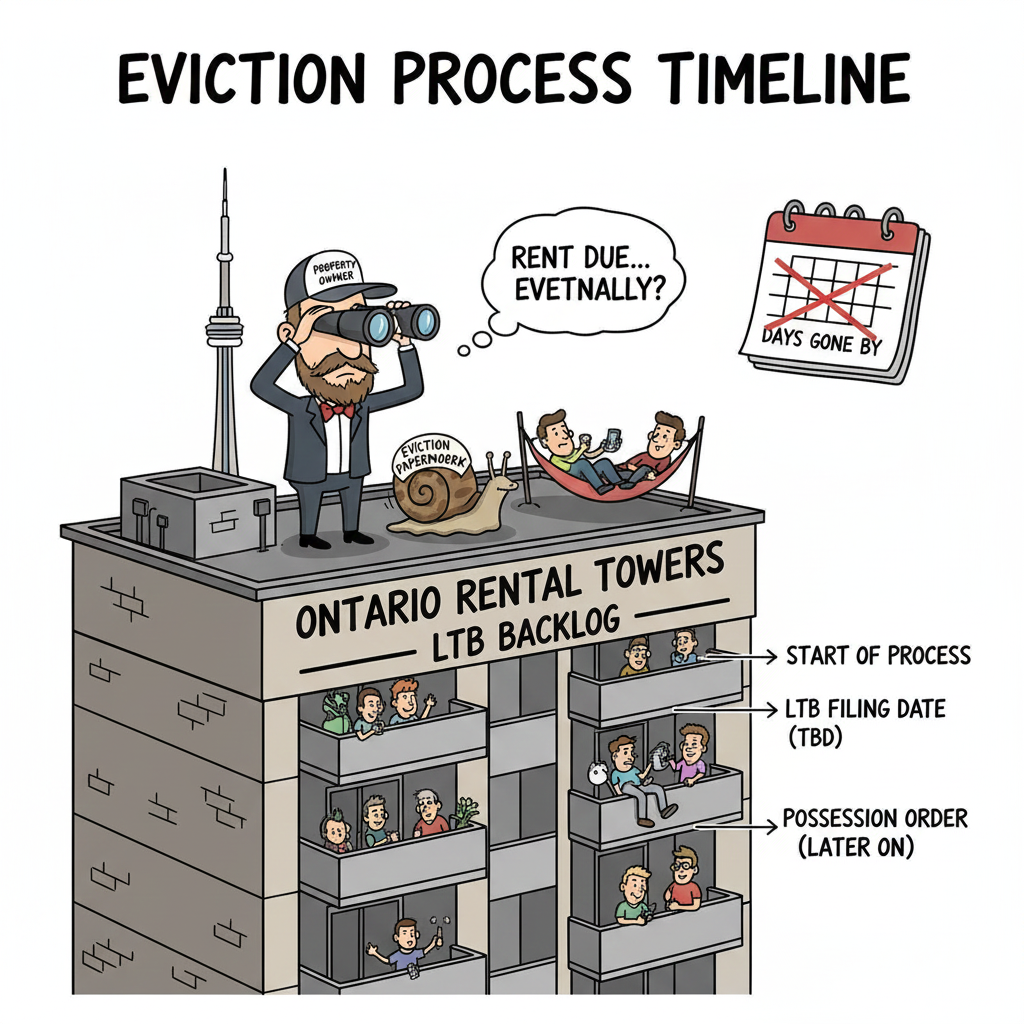



Eviction is rarely quick in Toronto at these times. Even when a tenant clearly violates the lease, Ontario landlords are often surprised by how long the eviction process actually takes. Understanding realistic timelines — and what causes delays — can help landlords plan properly and avoid costly mistakes.
This guide explains how long an eviction typically takes in Toronto, what affects the timeline, and what landlords can do to prevent unnecessary setbacks.
The Short Answer: Average Eviction Timelines in Toronto
In most Toronto cases, a residential eviction takes approximately 4 to 8 months from the first notice to enforcement by the Sheriff. Some cases take less time, while others can extend well beyond this range.
Timelines depend on:
- The type of eviction notice used
- Whether documents are served correctly
- The Landlord and Tenant Board (LTB) backlog
- The tenant’s response and conduct
Typical Eviction Timeline Breakdown (Ontario)
1. Serving the Eviction Notice
The eviction process starts with serving the correct notice:
- N4 (Non-payment of rent): 14 days (monthly tenancy)
- N5 (Interference, damage, behaviour): 7 days (first notice)
- N12 (Landlord’s own use): 60 days
- N13 (Renovation or demolition): 120 days
Common mistake: Using the wrong notice or completing/serving it incorrectly, which invalidates the process.
2. Waiting Period After the Notice
Landlords must wait the full statutory notice period before filing an application with the LTB. Filing too early results in dismissal. This waiting period alone can range from 7 days to several months, depending on the notice used.
3. Filing the Application with the LTB
After the notice period expires, the landlord files:
- L1 application (usually after an N4)
- L2 application (most other eviction notices)
Due to ongoing demand at the LTB, it can take 6 to 12 weeks or more to receive a hearing date in Toronto.
Due to ongoing demand at the LTB, it can take 6 to 16 weeks or more to receive a hearing date in Toronto.
4. Preparing for the Hearing
Evidence preparation is critical. Landlords must organize:
- The notice and proof of service
- Payment records
- Photographs, repair invoices, or complaints
- Written witness statements (if applicable)
Poor preparation is one of the leading causes of delays or dismissals.
5. The LTB Hearing
Hearings are conducted virtually (in most cases) or in person (in exceptional cases). Depending on the complexity of the case, the adjudicator may:
- Issue a decision orally, or
- Reserve the decision and issue a written order later
Written orders often take several weeks to be released. An eviction cannot be enforced without a written order.
6. Eviction Order and Enforcement
Once an eviction order is issued, landlords cannot enforce it themselves. Enforcement must be carried out by the Sheriff’s Office.
In Toronto, scheduling the Sheriff can take 3 to 4 additional weeks, sometimes longer during busy periods.
What Causes Eviction Delays in Toronto?
The most common causes include:
- Incorrect or defective notices
- Improper service of documents
- Missing or weak evidence
- Tenant requests for relief or repayment plans
- LTB scheduling backlogs and related adjournments
Can a Landlord Speed Up an Eviction in Ontario?
While landlords cannot bypass the legal process, they can reduce delays by:
- Using the correct notice from the start
- Strictly following service rules
- Filing applications on time
- Preparing complete, organized evidence
- Getting professional assistance early
Small procedural errors can easily add months to the process. Read more here about the most common Landlord’s mistakes.
In some cases, a Landlord may request an expedited hearing before the Landlord and Tenant Board. If such a request is granted, it may significantly speed up the proceedings.
When Professional Help Makes a Difference
Many Toronto eviction applications are dismissed not because the landlord is wrong, but because the process was not followed precisely. Early involvement of a licensed paralegal can prevent errors that force landlords to start over.
Frequently Asked Questions
How long does an eviction take in Toronto in 2026?
Most evictions take between 4 and 8 months, depending on the type of notice and the LTB backlog.
Why do evictions take longer in Toronto than elsewhere?
Higher case volume, administrative delays, and procedural complexity contribute to longer timelines.
Can a tenant delay an eviction?
Tenants may request relief, repayment plans, or raise procedural issues, which can extend timelines.
Does hiring a paralegal reduce eviction time?
While it cannot eliminate statutory delays, proper handling often prevents dismissals and restarts.
Need help with a Toronto eviction?
Facing an eviction in Toronto? Avoid delays by getting the process right from the start.
Understanding timelines is only the first step. Avoid delays by ensuring the process is handled correctly from the beginning.