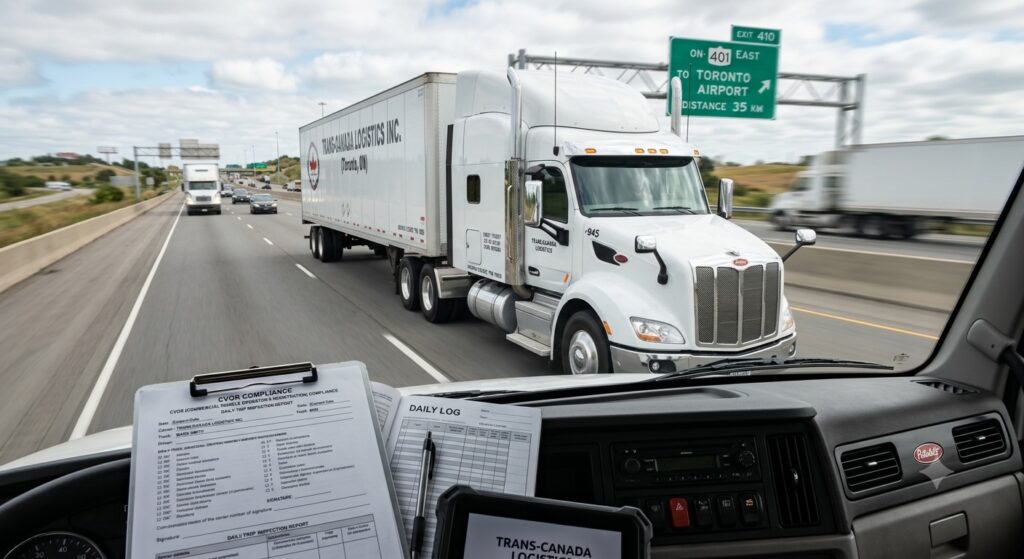



Many commercial drivers and trucking companies understand that receiving a ticket often involves two separate concerns: the immediate financial penalty and the potential consequences for the carrier’s CVOR record and safety rating.
While the fine is usually the first thing people notice, the long-term regulatory and business consequences of a conviction may, in many cases, be even more significant.
For commercial vehicle operators, an offence resulting in a conviction may have important consequences for a carrier’s CVOR record, safety rating, insurance costs, and business operations. In many situations, accepting a reduced charge may be beneficial.
Understanding the potential consequences before resolving a commercial vehicle charge may help drivers and carriers make informed decisions.
Is a Reduced Charge Always Better?
Not necessarily.
Many people assume that any reduction offered by the prosecutor is automatically a good resolution.
Commercial transportation law is more complicated.
When evaluating a proposed resolution, commercial drivers and carriers should consider:
- the nature of the offence
- who will be convicted
- possible CVOR consequences
- safety rating implications
- insurance implications
- the amount of the fine
A lower fine does not always mean a better overall result.
Why the Nature of the Conviction Matters
Different commercial vehicle offences may carry different regulatory consequences.
In some situations, a conviction for an offence carrying a higher fine may have less impact on a carrier’s CVOR record or safety rating than a conviction for another offence carrying a lower fine.
For that reason, commercial drivers and carriers should look beyond the financial penalty and consider the broader consequences of any proposed resolution.
Every Case Is Different
There is no standard resolution that applies to every commercial vehicle charge.
Factors that may influence the best course of action include:
- the specific offence
- the available evidence
- the carrier’s existing CVOR record
- the driver’s history
- the operational impact on the business
A resolution that is appropriate for one carrier may not be appropriate for another.
Should You Simply Pay the Ticket?
One of the most important consequences of paying a ticket is that it generally constitutes a guilty plea.
Before doing so, drivers and carriers should understand the potential consequences, including:
- CVOR implications
- possible effects on a carrier’s safety rating
- insurance considerations
- future regulatory consequences
In many situations, filing the ticket with the court to dispute the charge allows drivers and carriers to better understand the available resolution options before deciding how to proceed. Whether this is the best course of action depends on the circumstances of the particular case.
Driver and Carrier Interests May Differ
Although drivers and carriers often share the same objective, their legal and commercial interests are not always identical.
For example:
- a driver may be primarily concerned about employment and licence consequences
- a carrier may be primarily concerned about its CVOR record, safety rating, insurance premiums, and commercial reputation
Evaluating a proposed resolution from both perspectives may help achieve a better overall outcome.
Why Legal Advice May Be Valuable
Commercial transportation matters involve more than simply deciding whether to dispute a ticket.
Drivers and carriers may wish to understand:
- whether the proposed resolution is appropriate
- possible alternatives
- who may ultimately be affected by a conviction
- potential CVOR consequences
- the impact on the carrier’s business
Obtaining legal advice before accepting a plea offer or paying a ticket may help drivers and carriers make informed decisions.
Related Articles
To better understand Ontario’s commercial transportation system, you may also wish to read:
- Commercial Vehicle Charges and CVOR Consequences
- What Are CVOR Points? Common Misconceptions Explained
- Driver Convictions vs. Carrier Convictions: What’s the Difference?
Our transportation law series explains how Ontario’s commercial vehicle enforcement system works, from CVOR records and safety ratings to driver and carrier liability. Reading these articles together will provide a broader understanding of how commercial vehicle charges may affect both drivers and carriers.
Conclusion
A reduced charge may sometimes help reduce the overall consequences of a commercial vehicle matter, but every case is different.
Before accepting a plea offer or paying a ticket, commercial drivers and carriers should consider the broader implications of a conviction, including possible effects on CVOR records, safety ratings, insurance, and business operations.
Looking beyond the amount of the fine and considering the potential impact on a carrier’s CVOR record, safety rating, and business operations may help commercial vehicle operators make better-informed decisions.
Need Assistance With a Commercial Vehicle Charge?
Spectrum Paralegal represents drivers, owner-operators, and commercial carriers in Ontario facing commercial vehicle, transportation, and Provincial Offences charges.
If you have received a commercial vehicle charge and are concerned about potential consequences for yourself, your carrier, or your business, contact Spectrum Paralegal to discuss your situation and available options.